


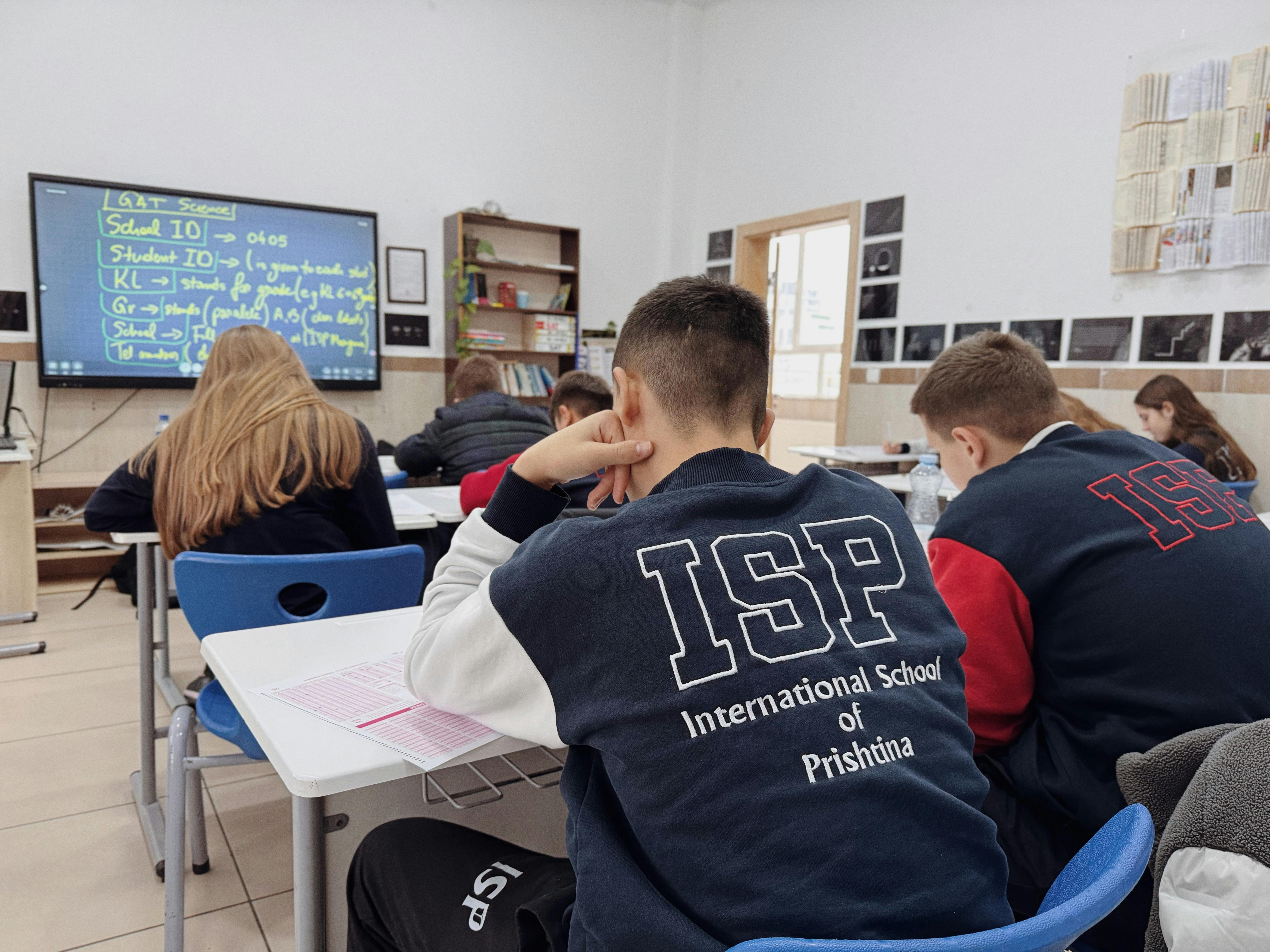
Every morning, students walk into class with their own unique ways of thinking, solving problems, and seeing the world.
Some students think in vibrant pictures. Others connect deeply with patterns or find energy through movement. There are also students with conditions such as autism, attention-deficit/hyperactivity disorder (ADHD), dyslexia, and dyscalculia.
A September 2024 McKinsey report found that about 20% of people are neurodivergent. This includes 13% to 15% with dyslexia, 5% to 7% with ADHD, and 1% to 2% with autism, proving these learners are already in every classroom.
Get matched with schools and therapy providers
Tell us your child's needs and location, and we'll match you with special-needs schools, ABA therapy centers, or speech-therapy providers in your area. Free for families.
Free for families.
Creating a supportive learning environment can help these neurodivergent learners thrive. Here are a few ways you can do that.
Rethink the Sensory Landscape of Learning Spaces
Classrooms are intensely active sensory environments. The brains of neurotypical students filter out this background noise without effort. But neurodivergent students often process sensory inputs with much greater intensity.
Unfiltered sensory input can quickly lead to sensory overload, emotional fatigue, or physical discomfort. A child who feels sensory overload cannot focus on math problems or reading assignments.
Overhead fluorescent lights create an invisible flicker. This flicker can trigger headaches and visual stress.
Instruct teachers to turn off half of the fluorescent fixtures during reading time and open blinds to let in gentle, natural daylight instead. A study published in Frontiers in Education reveals that 85% of students across all cohorts prefer natural light from windows over harsh overhead bulbs.
Classroom walls often burst with bright alphabet charts, rule lists, and student art. While well-intentioned, visual clutter competes for working memory.
Reserve one or two dedicated boards for essential daily tools. Keep visual clutter low around the main instruction board. Rotate student artwork rather than posting every project at once. Giving eyes blank wall space allows young minds to rest and refocus.
Shift from Deficit Thinking to Strengths-Based Learning
Traditional schools often judge kids against rigid standards. When a student can't sit still or spell conventionally, they are often labeled as unfocused, behind, or disruptive.
Sir Richard Branson captured this mismatch while advocating for education reform in August 2024: "The education system is full of round holes. Square pegs don't fit neatly in round holes, we're not uniform, and we don't fit snugly into the education system."
A strengths-based approach sees these differences as natural brain variations. Instead of dwelling on challenges, teachers focus on a child's passions and talents, like an autistic student's mastery of trains.
Instruct teachers to use these interests in their lessons. Ask them to teach math using train schedules, or let a student who loves ocean life research coral reefs for science.
Building a strengths-based school requires advocates who understand how families and schools work together. School social workers play a vital role here, turning neurodiversity-affirming ideas into practical classroom support.
A Master’s in Social Work (MSW) degree gives them the training, advocacy skills, and child development knowledge to connect teachers with students. Cleveland State University, quoting the U.S. Bureau of Labor Statistics findings, notes that jobs for social workers are expected to grow 9% through 2030.
To keep pace with the rising need for specialized student advocates, many practitioners pursue an MSW online advanced standing program. These targeted tracks let bachelor’s degree holders rapidly advance their skills in child development and school policy without pausing their current work in the field.
Teach with Universal Design and Multi-Modal Lessons
Historically, accommodation in schools meant waiting for a child to fall behind. That puts them through a lengthy diagnostic pipeline, and then offers isolated retrofitted modifications.
Universal design for learning (UDL) turns that model on its head by planning for learner variability right from the start. Instead of creating a lesson for an average student and improvising modifications, UDL designs flexible lessons right from the start.
The UDL framework rests on three pillars:
Multiple means of representation: Presenting information in different formats (text, visuals, audio, hands-on models).
Multiple means of action and expression: Allowing students to demonstrate understanding through diverse media (writing, speaking, building, drawing).
Multiple means of engagement: Offering choices, relevant challenges, and varying levels of support to sustain motivation.
Delivering lessons solely through lectures or lengthy textbooks leaves many learners behind. Dyslexic students may struggle to decode words quickly, while students with auditory processing differences can miss spoken details.
Pair spoken explanations with clear visual diagrams. Write key vocabulary and instructions on the board. Provide audiobooks, graphic novels, or short video summaries alongside print reading.
FAQs
How can teachers manage unpredictable daily transitions between activities?
Provide clear visual countdown timers and give advance verbal warnings before switching tasks. Consistently previewing upcoming schedule changes helps neurodivergent students mentally prepare, dramatically easing anxiety, reducing stress responses, and preventing behavioral disruptions during routine shifts.
How do schools balance grading fairness when students choose alternative assessments?
Grade students using objective, standards-aligned rubrics focused strictly on subject mastery rather than presentation format. Whether a learner submits an essay, oral recording, or visual model, assess the underlying comprehension criteria identically across all options.
What is the best way to help peers understand neurodiversity respectfully?
Host open, age-appropriate classroom conversations about how every human brain processes information differently. Frame varied thinking styles, sensory preferences, and communication tools as ordinary natural differences, avoiding medical labels while actively modeling empathy and mutual peer acceptance.
Key Statistics
Finding / Scope | Value / Rate |
|---|---|
General population identification as neurodivergent | ~20% |
Prevalence of dyslexia | 13% – 15% |
Prevalence of ADHD | 5% – 7% |
Prevalence of autism | 1% – 2% |
Students preferring natural window light over overhead bulbs | 85% |
Projected employment growth for social workers through 2030 | 9% |
At its heart, neuro-inclusive education is less about rigid protocol and more about an everyday commitment to empathy, curiosity, and patience.
Take these steps, and you will build a school where every child feels respected, understood, and equipped to achieve their fullest potential. You also send a clear, life-affirming message to every child who walks through your doors, and that is, their mind is welcome exactly as it is.
Find schools and therapy providers for your child
Tell us your child's needs and location, and we'll match you with special-needs schools, ABA therapy centers, or speech-therapy providers in your area. Free for families.