


Parents typing "Uta Frith Autism" into search want straight answers on her March 2026 comments. Dame Uta Frith, a top researcher, calls the autism spectrum too broad and meaningless because diagnoses have exploded. She pushes for clear subtypes instead of one catch-all label to better match kids' real needs with support.
This matters for you as a parent picking therapies or schools. Her view highlights why cookie-cutter approaches fall short. Read on for who she is, her exact points, and steps like early screening or ABA therapy choices.
Who Is Dame Uta Frith?

Dame Uta Frith shaped modern autism understanding over decades. Emeritus professor at University College London, she started researching in the 1960s when autism seemed rare, like "childhood psychosis." Her 1989 book Autism: Explaining the Enigma explained cognitive puzzles in autistic kids.
Get matched with schools and therapy providers
Tell us your child's needs and location, and we'll match you with special-needs schools, ABA therapy centers, or speech-therapy providers in your area. Free for families.
Free for families.
Frith helped pioneer ideas like theory of mind, where some autistics struggle reading social cues. Knighted as Dame for her work, she influences policies and diagnoses worldwide. In 2026, at 87, she questions the spectrum she once backed, based on new data showing autism lacks one cause.
For parents, her credibility means her words carry weight. If your child got diagnosed recently, her shift prompts checking if the label fits perfectly or needs finer tuning.
What Did Uta Frith Say in March 2026?
In a TES magazine interview, Frith said the spectrum "widened to the point of collapse." Diagnoses tripled in UK kids from 2015-2025, straining schools. She sees no single condition or cause, just overlapping traits.
Frith splits autism into groups: one with intellectual disability or language delays, often spotted before age 5. The other lacks those but shows social anxiety or sensory hypersensitivity. She worries broad criteria label normal struggles as autism, diluting help for severe cases.
Scenario: Your 7-year-old masks anxiety as autism. Frith's view says test for subtypes first, avoiding mismatched therapies. Concrete takeaway: Request subtype assessments in IEPs to target supports.
Her Take on School Adjustments
Frith doubts unproven tweaks like ear defenders or dim lights. No solid studies show they help long-term, she notes. Parents, track if these ease your child's day or just feel good short-term.
Log sensory tool use: Note meltdowns before/after.
Pair with data: Use apps tracking focus gains.
Shift to proven: Build social scripts over gadgets.
Why Diagnoses Are Skyrocketing
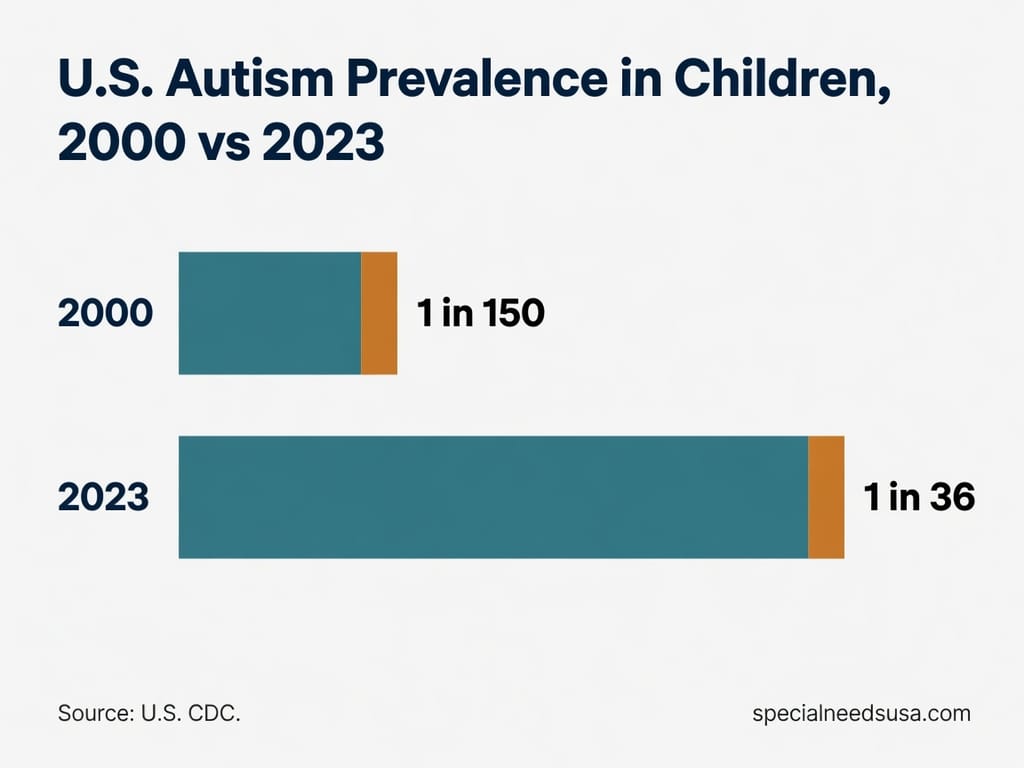
US rates hit 1 in 36 kids by 2023, per CDC, up from 1 in 150 in 2000. Broader criteria in DSM-5 folded Asperger's in. Awareness grew, but Frith says it overincludes anxious or quirky kids.
Parents face waits for services. In the US, check state trends via SpecialNeedsUSA state resources. Northern Virginia booms in services due to demand, per one report.
Decision guide: If diagnosis feels loose, seek second opinion. Compare pre-2013 vs. now criteria. Takeaway: Early, precise labels unlock insurance-covered ABA, as in this insurance guide.
Frith's Push for Autism Subtypes
Instead of spectrum, Frith wants distinct types. Classic: Intellectual/language issues, early ID. Modern: High anxiety, sensory overload, later diagnosis.
Research backs multiple causes, genetics vary. For parents, this means tailored paths. Scenario: Child A needs language therapy; Child B, anxiety coping.
How Subtypes Guide Therapy Choices
Classic subtype: Heavy on speech, cognitive supports. Sensory/anxiety type: Social skills, coping tools.
ABA shines for both but customize. Weigh ABA therapy vs. special needs schools by subtype. List pros:
ABA: Data-driven behaviors, home/school fit.
Schools: Peer practice, full-day structure.
Hybrid: Best for mixed needs.
Find providers at SpecialNeedsUSA therapy directory.
Practical Steps for Parents Right Now
Frith's debate doesn't halt action. Start with screening.
Screen Early and Accurately
Use tools from how-to-screen-early-for-autism guide. M-CHAT at 18-24 months flags risks. If positive, push pediatrician for ADOS testing.
Takeaway: Subtype clues in reports guide next moves. Anxiety flags? Add CBT.
Navigate Insurance and IEPs
2026 laws expand ABA coverage. See 2026 insurance guide. In IEPs, cite Frith: Request subtype eval for targeted goals.
Scenario: School pushes inclusion. If classic subtype, argue for smaller class like in beyond one-size-fits-all.
School and Therapy Picks
Match subtype to setting. Sensory type: Flexible schedules help, per trends. ABA centers in Orlando or Georgia via directories.
Community feedback key: Read reviews before enrolling.
The Autism Debate: Counterpoints
Not everyone agrees. Autistic advocates say subtypes gatekeep, excluding high-masking women diagnosed late. Attwood & Garnett respect Frith but defend spectrum inclusivity.
Others like NeuroDivergent Rebel argue it ignores lived experience. Parents: Balance research with your child's signs. Track progress quarterly.
Big picture: Debate spurs better science. US trends show more nuanced services by 2026.
FAQ
What subtypes does Uta Frith propose? Classic with ID/language issues, and anxiety/sensory without.
Does this change my child's diagnosis? Not automatically. Push for detailed eval.
How to apply this to IEPs? Cite rising diagnoses, request targeted supports.
Best therapies per subtype? ABA customized, speech for classic, anxiety tools for others.
Find schools and therapy providers for your child
Tell us your child's needs and location, and we'll match you with special-needs schools, ABA therapy centers, or speech-therapy providers in your area. Free for families.