

Yes. In 2026 every state has some form of autism insurance mandate for private health plans—and most cover ABA therapy, speech, OT, and evaluations when they're medically necessary. The catch: it only applies to many plans, not all. Self-funded employer plans often don't have to follow state rules. So the real question isn't "does insurance cover autism?" It's "does my plan cover it?"
This guide is for parents who want to know how autism insurance actually works in 2026, what's usually covered, and how to avoid surprise bills and delays.
Does Insurance Cover Autism?
All 50 states require some level of autism coverage for fully insured, state-regulated health plans. That usually means ABA (applied behavior analysis), speech therapy, occupational therapy, psychological services, and diagnostic evaluations when a qualified provider says they're medically necessary.
Get matched with schools and therapy providers
Tell us your child's needs and location, and we'll match you with special-needs schools, ABA therapy centers, or speech-therapy providers in your area. Free for families.
Free for families.
Your actual coverage depends on your state, whether your employer's plan is fully insured or self-funded, whether your child has a formal diagnosis, and your deductible and out-of-pocket max. The headline law matters less than the fine print of your policy.
Quick Answer: What's Usually Covered
Most state-regulated plans that follow autism mandates cover:
ABA therapy (assessment, direct therapy, parent training, BCBA supervision)
Speech and language therapy
Occupational therapy
Psychological services and autism evaluations
Prescribed therapies when documented as medically necessary
Self-funded employer plans are not required to follow state mandates. Some do anyway; many cap ABA at an annual dollar amount or age. Checking whether your plan is fully insured or self-funded is one of the first things to do.
Understanding ABA Therapy Coverage
ABA is the most talked-about autism treatment in insurance rules. In state-regulated plans, ABA is typically covered when deemed medically necessary and prescribed by a qualified provider. That includes assessment, ongoing sessions, parent training, supervision by a Board Certified Behavior Analyst (BCBA), and direct hours from a Registered Behavior Technician (RBT).
Self-funded plans and some legacy policies can still exclude ABA unless the employer adds it. That's one of the biggest sources of confusion for families.
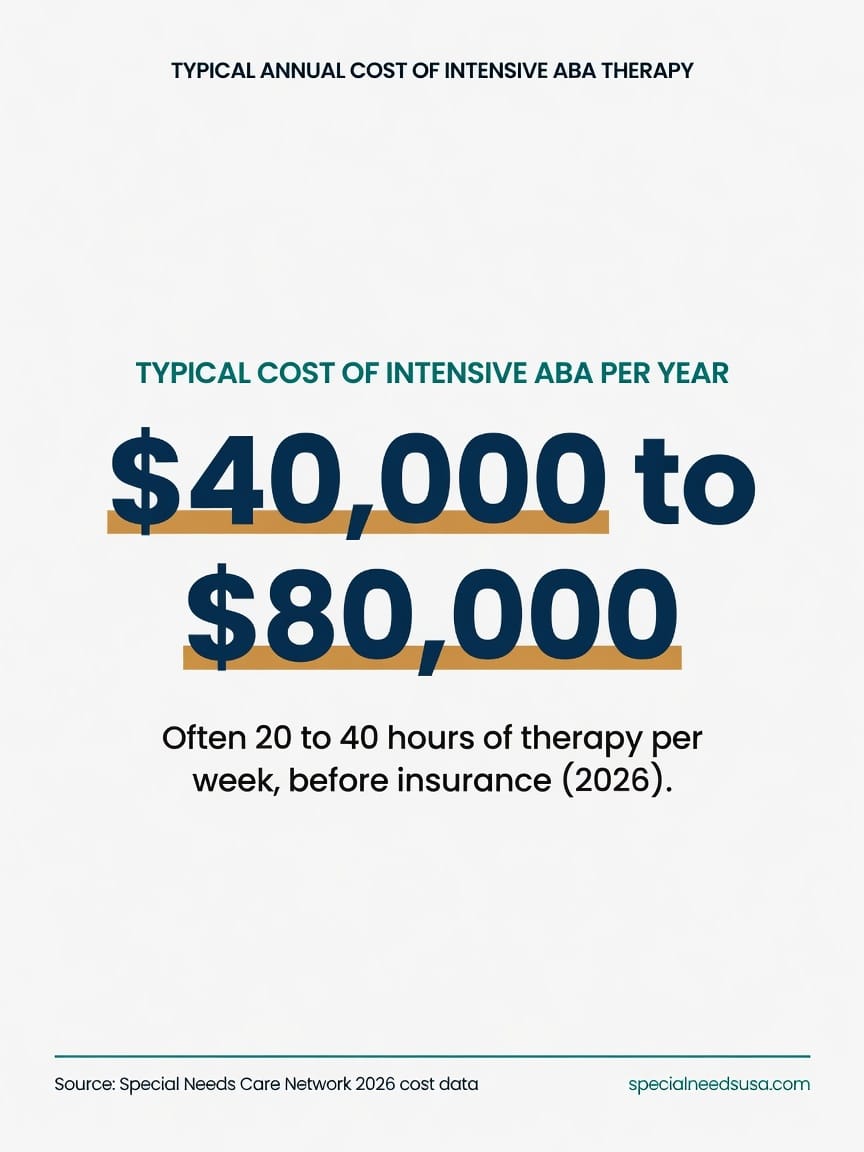
Intensive ABA often runs 20–40 hours per week. Uninsured, that can mean tens of thousands of dollars a year. With insurance, your exposure is usually capped by your plan's out-of-pocket maximum. We break down why ABA is usually covered and when it isn't in our guide to ABA therapy and insurance.
Medicaid and Autism Services
Under the federal Early and Periodic Screening, Diagnostic, and Treatment (EPSDT) benefit, Medicaid in every state must cover medically necessary autism services for people under 21. That includes behavioral therapy, diagnostic services, and related therapies when clinically appropriate.
States run Medicaid differently. Prior auth, provider networks, and waiver programs (and waiting lists) vary. For families who qualify, Medicaid can cut the financial load of autism treatment a lot.
School Services vs. Medical Services
Schools provide educational supports through an IEP or 504 plan when a child qualifies. That can include speech, OT, behavioral supports, and classroom help. Those services are for education and access to the curriculum.
They are not a substitute for medically necessary behavioral therapy when a clinician recommends intensive treatment. Many families use both: school for academic support and insurance-funded therapy for clinical treatment.
State Mandates: Florida, Texas, Georgia, and Virginia
Florida, Texas, Georgia, and Virginia all require ABA coverage in many fully insured private plans. The details differ: some states have age limits, annual dollar caps, or service limits. Self-funded employer plans are often exempt.
Verify whether your policy is fully insured or self-funded and check any age or dollar caps. Autism mandate laws are still changing in 2025–2026, so confirm current rules instead of relying on old summaries.
Common Insurance Barriers
Even with coverage, families hit denied claims, slow prior authorizations, or narrow networks. High deductibles also create big upfront costs early in the year.
When a claim is denied, you can request a written Explanation of Benefits, file an internal appeal, and then pursue an external review if needed. A lot of denials are overturned when documentation clearly shows medical necessity. The main variable is documentation.
How to Navigate Autism Insurance in 2026
Treat insurance as part of the plan, not an afterthought.
Get a formal diagnosis from a qualified provider. It's the base for everything else.
Request a written summary of autism benefits from your insurer.
Confirm whether your plan is self-funded or fully insured so you know if state mandates apply.
Track your deductible and out-of-pocket max during the year so you can plan cash flow.
Keep copies of authorizations and therapy plans in case you need to appeal.
Finding a provider who takes your plan and handles auth and billing helps. You can search our therapy directory for providers by location and need.
What Autism Treatment Actually Costs in 2026
Intensive ABA often runs about $40,000–$80,000 a year depending on hours and region. Insurance doesn't make it free, but it usually turns that into a fixed annual ceiling: you pay deductible, then coinsurance, until you hit your out-of-pocket max. After that, covered services are typically paid at 100% for the rest of the year.
Understanding that structure helps you anticipate costs instead of being surprised.
Finding Providers Who Take Your Insurance
Not every autism provider is in every network. When you look at clinics, confirm they take your specific plan, whether they handle pre-authorization, and whether their staff helps with appeals if something is denied.
Many ABA clinics have billing staff who know insurer requirements. That can reduce a lot of the administrative stress. Our therapy finder and schools directory can help you find options in your area.
Frequently Asked Questions
Does insurance cover autism?
Yes, in all 50 states many private plans must cover medically necessary autism treatment, including ABA, speech, and OT. Coverage applies mainly to fully insured, state-regulated plans. Self-funded employer plans may not follow state mandates, so check your plan type.
Does insurance cover ABA therapy?
Most state-regulated health plans cover ABA when it's deemed medically necessary and prescribed by a qualified provider. Self-funded employer plans may not, or may cap benefits by age or dollar amount. Confirm with your insurer and your summary of benefits.
What autism services does Medicaid cover?
Under federal EPSDT rules, state Medicaid programs must cover medically necessary autism services for individuals under 21, including behavioral therapy, diagnostics, and related therapies. Exact services and prior-auth rules vary by state.
Why was my autism claim denied?
Common reasons include missing or unclear medical necessity documentation, treatment not prescribed by an in-network or qualified provider, or plan exclusions (e.g., some self-funded plans exclude ABA). Request an EOB, then file an internal appeal with strong documentation; many denials are overturned.
What's the difference between school-based therapy and insurance-funded therapy?
School-based services (IEP/504) are for educational access and are not a substitute for medically necessary therapy. Insurance-funded therapy is for clinical treatment prescribed by a provider. Many families use both.
Bottom Line
Autism insurance in 2026 is stronger and more consistent than it was a decade ago. Federal rules block pre-existing condition denials, and Medicaid sets a baseline for kids nationwide.
Plan type still decides what you get in practice. Families who check whether their plan is fully insured or self-funded, watch their deductible and out-of-pocket max, and keep solid clinical documentation are more likely to keep services without gaps. Early intervention still matters most; insurance is one part of making it happen.
Find schools and therapy providers for your child
Tell us your child's needs and location, and we'll match you with special-needs schools, ABA therapy centers, or speech-therapy providers in your area. Free for families.