

Stimming in Autism: What Parents Need to Know
Stimming can be one of the most visible and confusing parts of autism for families. This article is meant to help you understand what stimming is, why your child does it, and how you can respond in ways that are safe, respectful, and supportive.
What is stimming?
Stimming is short for "self-stimulatory behavior." It refers to repetitive movements, sounds, or actions your child uses to help their body and brain feel "just right." Hand flapping, rocking, pacing, humming, repeating words, tapping objects, and staring at spinning items are all common examples.
Get matched with schools and therapy providers
Tell us your child's needs and location, and we'll match you with special-needs schools, ABA therapy centers, or speech-therapy providers in your area. Free for families.
Free for families.
Everyone stims to some degree. Adults tap a foot, twirl their hair, click a pen, or scroll their phone when they're stressed or bored. Autistic people tend to stim more often and more intensely, and it plays a bigger role in getting through the day.
Why autistic children stim
Stimming almost always has a reason behind it, even if it looks random to an outside observer. It commonly serves these functions:
Sensory regulation
To calm down when the world feels too loud, bright, crowded, or unpredictable
To “wake up” or focus when they feel tired, bored, or under-stimulated
Emotional regulation
To cope with strong feelings like anxiety, frustration, fear, or anger
To express joy, excitement, or anticipation when words are hard to find
Comfort and predictability
To create a familiar, soothing rhythm when things feel chaotic
To feel more in control of their body and environment
Communication
To show “I’m overwhelmed,” “I need a break,” or “I’m really excited!” when they can’t say it clearly
Once you start reading stimming as a signal instead of a problem, responding in a supportive way gets a lot easier.
Common stimming behaviors you might see
Every child is different, but these patterns come up often:
Movement stims
Hand flapping, finger flicking
Rocking back and forth, spinning, pacing
Jumping, bouncing, or walking on toes
Visual stims
Watching spinning objects (fans, wheels, toys)
Lining up toys and looking at them from certain angles
Staring at lights, reflections, or moving patterns
Sound/vocal stims
Humming, squealing, or making rhythmic sounds
Repeating words or phrases from shows or conversations (echolalia)
Tapping, clicking, or banging objects
Touch and oral stims
Rubbing or scratching surfaces, clothes, or skin
Twirling hair or playing with fingers
Chewing on shirts, toys, or other objects
Some stims cross into unsafe territory: head-banging, biting hard enough to injure, hard slapping, aggressive skin picking. These are the ones that usually call for active support and safer alternatives.
Is stimming “bad” or something to stop?
Many autistic people and advocates describe stimming as a valid self-regulation tool, not a bad habit, and simply part of how their brain works. Trying to eliminate all stimming tends to backfire:
Increases anxiety, stress, and exhaustion
Can make it harder for a child to focus, learn, or communicate
Teaches them that their natural ways of coping are wrong or shameful
"How do I stop this?" usually isn't the most useful question to ask. Try these instead:
“Is this stim safe?”
“Is it truly interfering with learning, relationships, or daily life?”
“What is this behavior telling me about what my child needs right now?”
When a stim is safe and not severely disruptive, accepting it is usually the most supportive approach. If adjustments are needed, small ones, like where or when it happens, are typically enough.
When should parents be concerned?
More targeted support may be needed when:
Your child is hurting themselves (head-banging, severe biting, hitting, scratching, or picking until they bleed)
The behavior is so intense or frequent that they can’t eat, sleep, go to school, or interact with others
Stimming is driven by extreme distress (meltdowns, panic, or frequent self-injury)
You feel unsure how to keep them safe
In these situations, it can be helpful to talk with professionals such as an occupational therapist (OT), behavior analyst, psychologist, or developmental pediatrician. The goal is not to “erase” stimming, but to protect your child’s safety and teach them other ways to cope.
How parents can respond in everyday life
1. Start with observation, not correction
Before you step in, pause and ask yourself:
What just happened before the stimming started?
Is the environment loud, crowded, bright, or unpredictable?
Is my child tired, hungry, anxious, or excited?
Does this stim seem to calm them, energize them, or show happiness?
Treat your child's stimming as information. It's frequently the first sign that something in their environment needs to change.
2. Accept safe stimming
If the behavior is safe, a few options are worth considering:
Allowing it to continue, especially at home or in calm spaces
Letting your child stim during activities if they can still participate (for example, rocking while listening to a story)
Ignoring any judgmental looks from others and focusing on your child’s well-being
You can also model acceptance with neutral or positive language:
“It looks like your hands are helping you calm down.”
“You flap when you’re excited! That’s okay.”
3. Adjust the environment
When sensory overload or stress is driving the stimming, small environmental changes can help:
Lower the volume (turn down TV, move to a quieter area, use headphones)
Dim bright lights or move away from strong visual stimulation
Shorten errands or visits, and build in breaks
Stick to predictable routines; prepare them for changes with visual schedules or simple explanations
When the environment becomes more manageable, the need for intense stimming often eases up on its own.
4. Offer sensory tools and “safe stims”
You can offer alternatives that meet the same need, just in a safer or more flexible way:
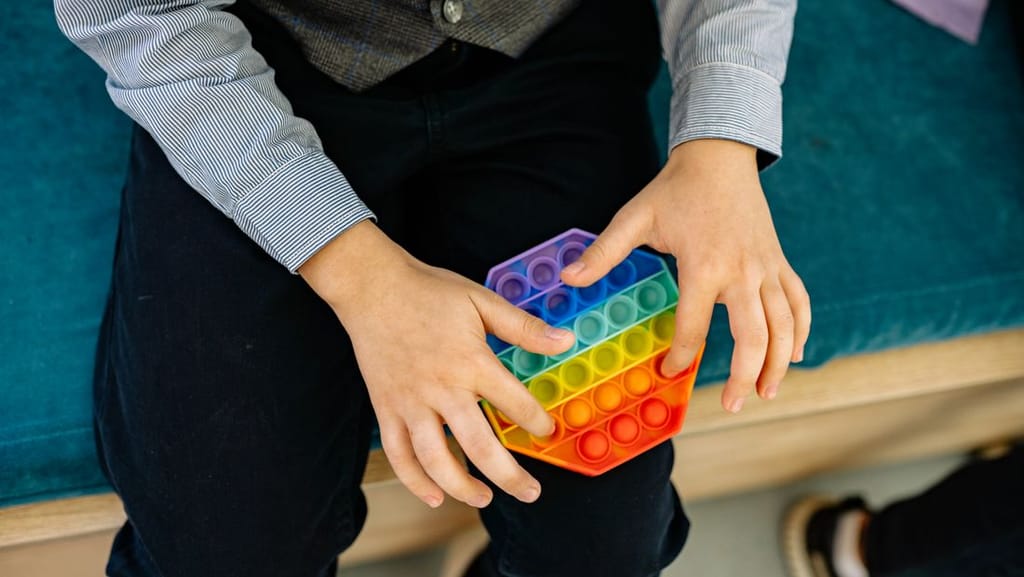
Fidget toys, stress balls, pop-its, or textured objects
Chewable jewelry or chew sticks instead of chewing clothing or unsafe items
Weighted lap pads, blankets, or firm hugs (if your child likes them)
Rocking chairs, mini-trampolines, swings, or therapy balls
Calming creative activities like printable coloring pages (the Cozy & Relaxing and Stress Relief collections at Color Cove are free and a good fit), drawing, kinetic sand, or playdough
Try language like: "Your body looks like it needs to move. Do you want your fidget or the trampoline?"
5. Create “stim-friendly” spaces and times
Having places and times where your child can stim without pressure makes a real difference:
A cozy corner at home with pillows, dim lights, and sensory toys
After-school “unwind” time where they can rock, flap, pace, or listen to the same song on repeat
Clear agreements like: “At the restaurant, we use quiet stims, and when we get home, you can jump as much as you want.”
This lets your child regulate themselves while still learning to navigate community expectations.
6. Support safer alternatives for harmful stims
When your child's stimming isn't safe, try this approach:
Protect first: gentle blocking of self-injury, adding padding, or moving them to a safer space
Offer a replacement that gives a similar feeling but is safer (for example, pushing their head into a pillow instead of a wall, squeezing a stress ball instead of hitting themselves, deep-pressure hugs instead of hard slaps)
Teach simple communication for their needs: “Break,” “Too loud,” “All done,” or a visual card they can hand to you
Over time, pairing safer replacements with better communication tends to reduce dangerous stims, without punishing the behavior itself.
Talking with schools and therapists about stimming
You're your child's best advocate. When you sit down with teachers, therapists, or school teams, it helps to raise a few things:
Asking how they view stimming: Is it seen as behavior to “fix,” or a regulation tool to understand and support?
Clarifying which stims are truly unsafe or disruptive, and which are simply different
Requesting accommodations: movement breaks, sensory tools, access to a calm space, and permission for quiet stimming in class
Sharing what works at home (favorite tools, break routines, phrases that help)
Good collaboration centers on safety, learning, and dignity, not on making your child look "typical" at all costs.
Supporting your child’s identity and self-esteem
How adults respond to stimming sends a powerful message. Kids who hear "stop that," "hands down," or "that's weird" over and over can learn to hide who they are and feel ashamed of their own needs.
A few ways to protect your child's sense of self:
Using respectful language: “This is how your body helps you,” rather than “That’s a bad habit.”
Explaining that different brains have different needs, and that their ways of coping are valid.
Teaching them when certain stims might bother others and brainstorming together where and how they can stim freely.
Many autistic teens and adults, looking back, say being allowed to stim safely was one of the most helpful supports they ever got.
Final thoughts for parents
If your child stims, it usually means their body and brain are working hard to manage the world around them. Your job isn't to erase these behaviors. It's to keep your child safe, understand what the behavior is telling you, and make room for their natural way of being.
Discover Autism Clinics in Your Area
Want a kid-friendly companion to share with siblings or classmates? Read 18 Autism Facts for Kids.
Find schools and therapy providers for your child
Tell us your child's needs and location, and we'll match you with special-needs schools, ABA therapy centers, or speech-therapy providers in your area. Free for families.