


Eric recently sat down with Kate O'Connell, international educator, leadership coach, and former head of school, for a wide-ranging conversation about what it truly means to support children with special needs in today's schools. Eric and Kate covered a lot of ground: inclusion practices and how schools signal their real commitment to them, modern trends in both US and international education, differentiated instruction, masking in girls with ADHD, the role of ABA therapy support inside the classroom, and how regulations shape (and sometimes complicate) the educational environment.
Kate brings 25 years of frontline and leadership experience to every topic she touches, and this conversation was no exception.
Get matched with schools and therapy providers
Tell us your child's needs and location, and we'll match you with special-needs schools, ABA therapy centers, or speech-therapy providers in your area. Free for families.
Free for families.
Eric: When parents are looking at schools for a child with special needs, what questions might they want to ask the school administration?
Kate: You can get a feel for their enthusiasm for inclusion for example, if they are excited about recent training or conferences they have attended. By the same token, if they get defensive when asked about inclusion, you can get an idea of how supported the teachers are. One really good question is how supported the teachers are, because you want to choose a school that supports not just inclusion, but also supports the teachers so they can properly support the students.
Another thing would be to ask how active the parent community is for students with special needs. You want to find out who the providers are that the school works with, and if they're allowed in during the day.
Eric: You mention outside providers joining the school. How about co-teaching models? Do you generally think a co-teaching model is really helpful? A lot of schools, international schools, are moving in that direction.
Kate: Co-teaching is the best. I've had a really good experience with co-teaching in a Year One class (typically six- to seven-year-olds). We had a very wide range of kids, many of whom had spent most of the year at home during COVID and were now learning to read and write in Year One. There were a lot of needs and special cases.
When you're co-teaching, you can work together. You have somebody else you can turn to and say, "Hey, I don't think this is going the way I thought it would, or this student isn't responding to this. What do you think we should do?" Two brains are better than one.
In our model, we put two classes of about 17 students together for a lot of the lessons. We took turns teaching, and while one person was teaching, the other could be watching and supporting individual students. We also had two teaching assistants, so it was about maximizing the use of the adults in the room — basically two teachers plus two teaching assistants.
Eric: It also gives you a much better teacher-to-student ratio.
Kate: Yes, absolutely. Individualized attention just makes more sense.
Personally, I found that when I had a class size just under 20, I could pretty much keep in my head where every kid was and what they were doing. Teachers' brains can only hold so much information. Once you get up to 25 kids, that's a lot to remember and track off the top of your head, plus all the data and admin as well.
Eric: What about trends in education right now? Are there any you think are worthwhile, or any you think might be overrated?
Kate: UDL (Universal Design for Learning) is a big trend, and I think that's really smart. But the trend I question is teaching all kids the exact same phonics at the exact same time.
Eric: So you're talking about early learners — the teacher at the front of the class having all the students sound out the words together?
Kate: Yeah. People seem to love these programmes now, and I understand why: the research base for systematic, explicit phonics instruction is strong. My question is about how it's delivered. Teaching all children the exact same sequence at the exact same pace, without reference to where they actually are as readers, misses the point of good phonics instruction. I've always taught using stations or ability-based groups, diagnosing exactly where each child was. One child had beginning and ending sounds but not vowels yet; another had those but not blends or magic-e. That's the spirit of approaches like Words Their Way: use the evidence, but start from the child.
Eric: It does feel like going back in time.
Kate: To me, the spirit of UDL is about access and challenge at once — what some educators describe as a low floor so everyone can enter the learning, and a high ceiling so no one is held back. When you teach everyone exactly the same thing, you might hit the low floor but lose the high ceiling. The weakest student or the one who's furthest behind ends up dictating the pace of the whole lesson.
I read The End of Average by Todd Rose. When you plan for the average, you plan for no one. It also goes against the idea of high expectations.
A better model is stations or ability-based groups, where each student is working at a level that pushes them forward. We've swung from whole-class teaching to guided reading and ability groups, to strategy groups, and now it seems to be swinging back to whole-group again. Instead of swinging between whole belief systems, I wish we trusted teachers to do what's best for the actual kids in front of them. Some years, the whole group might work perfectly for that class; other years, the kids are so far apart that it might be better to mix grades or group kids by ability.
I recently spoke with a teacher at an English language school in Korea who groups students by language ability rather than age. I'd be curious to know more about how that works in practice.
In big whole-group settings, students with learning disabilities can sometimes feel awkward because they know they're slowing everyone down. Very bright students, especially girls with ADHD, might mask their needs and appear fine in the group but struggle elsewhere.
Eric: What does masking look like in practice?
Kate: In my last headship, there was a high-performing girl who was one of the top students in the school. She was very good at masking her ADHD (which ran in the family). Her aunt was actually a diagnostician. The girl would make it through the entire school day, then come home and scream and cry; she'd just flop on the bed. She had been holding it together all day.
She might have done better if teachers had acknowledged how brilliant she was and let her learn in her own ways — give her the textbook and let her hyper-focus instead of forcing her to do exactly what everyone else was doing at the same time. Masking is draining.
Research, including a growing body of work on women and girls with ADHD, consistently shows that the coping strategies many develop to manage in school can come at a significant cost to their home life, relationships, and emotional well-being. Parents will say their child is completely different at home — disorganized, stressed, or explosive — while teachers say, "She's so organized and top of the class!"
It often plays out differently in girls because of social expectations and how they mask.
I've been speaking with people in educational organizations, including Dana Watts from International School Services (ISS). She mentioned a recent conference session on girls with ADHD that was standing-room-only.
Eric: I've seen young students with ADHD who had massive outbursts and really struggled with self-control. In those cases, you really need a counselor or therapist on site. Having those resources is really important but they're not always readily available.
Kate: Absolutely. With one very young student, it was hard to support him in class, but the teacher worked with the parents and brought in an Applied Behaviour Analysis (ABA) therapist who came weekly. In Cambodia, we don't have many on-staff specialists, but we allow outside providers (speech therapists, occupational therapists, etc.) to come in during the school day. That way, the child practises those skills in context, building procedural memory right in the environment where they need them most.
Eric: Going back to our previous questions, we were talking about questions to ask the admin: What if a parent wants to come in and observe a lesson? Is that something parents can feel comfortable asking?
Kate: It's always a tough one. When I was in the US, I had a blind student with special needs. His mom was putting a lot of pressure on me, saying I wasn't paying enough attention to him. I invited her in to see the full context. After observing, she was really proud of how well her son was actually doing, even though there were 25 first-graders and a lot of transitions happening. She realized the school wasn't the right fit for him and chose — not out of anger, but understanding — to find a school with a smaller student-to-teacher ratio and teachers with specialist training in visual impairment.
As a school leader, I think it's good for parents to ask how the principal or admin team is involved day-to-day, and how decisions about their child are made.
In my role as head of school, we actively included students with special needs, limiting placements to one or two per class. I spent a lot of time supporting parents and teachers — explaining needs, helping everyone understand the decisions. Sometimes the leader acts as a conduit because individual teachers may not have the authority to explain certain choices. The principal can say, "We decided this because of X," or explain why a child isn't participating in PE and what alternative we found.
Eric: How do you feel about leadership styles where teachers are empowered versus the principal making the sole decisions, when it applies to inclusion?
Kate: Teachers can share what they feel is best, and the leader can run it through a leadership lens. Teachers know the day-to-day realities: what time recess is, how many kids are in the hallway, what might set a particular child off, or that a student needs the bathroom right after eating. I learned the hard way that decisions made in isolation often don't work logistically.
It's better as co-creation: teachers provide the ground-level input, and leaders add the big-picture wisdom and slight revisions. Teachers can't always see the big picture because they're in the nitty-gritty with the kids every day, while leaders, stepping back from the day-to-day, can hold the wider view.
Eric: Fairness questions always come up — "Why can't my child do that too?"
Kate: Yes, and how the leader handles that is important. We had situations where we made accommodations for a child with severe trauma around school. It was a co-creation between the teacher, parent, and school because we wanted to give him a chance after he had struggled to settle in every previous setting. Sometimes that meant different arrangements, and we had to explain it carefully to other families and teachers.
Eric: Can you think of a success story with a student who had a diagnosed learning disability where you found a really good solution?
Kate: The student I mentioned earlier with the ABA therapist was a success. He was placed with a mature teacher who was open to it. Some teachers worried about having too many adults in the room, but this teacher learned a lot from the ABA therapist. The therapist also acted as a bridge with the parents.
We reduced his hours at school, on the therapist's advice — not because we didn't want him there, but to build short periods of success he could grow from. The goal was to create positive "muscle memory" of school instead of repeated negative experiences.
The ABA therapist worked one-on-one with him in the classroom while the other kids were there, focusing on things like impulse control, greeting adults properly (very important in Cambodia), taking shoes off at the door, basic hygiene, and setting him up for social success. He was only three years old.
Eric: From an international perspective versus your experience in the US, what are some key differences in inclusive practices?
Kate: The biggest difference is that the US has far more laws and regulations about how things must be handled. International schools don't always have that, but they can often handle things really well on a case-by-case basis.
The downside of heavy laws is that sometimes people develop a false sense of security — "We have laws/IEPs for that" — instead of truly looking at the individual child and family. In international schools, it often feels more like a community school where you really get to know the families. In big public schools, that nurturing personal touch can sometimes get lost.
About our Guest:
Kate O'Connell Educator | Leader | Coach | Speaker
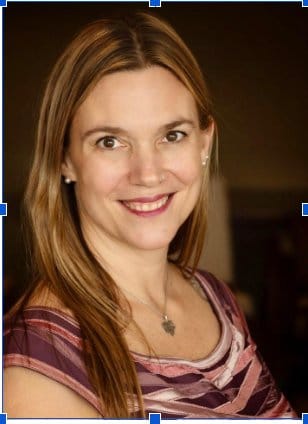
With 25 years in education, including 22 years in the classroom and 20 years in leadership, Kate O'Connell brings a rare combination of frontline teaching experience and strategic vision to every school she serves. She works with educators and school leaders to strengthen systems, develop talent, and create the conditions where students and staff can genuinely thrive.
She is available for speaking engagements, leadership coaching, and school consulting.
Visit her website: https://www.kateoconnelledu.com/
Use those questions alongside choosing a special needs school and browse schools near you.
Find schools and therapy providers for your child
Tell us your child's needs and location, and we'll match you with special-needs schools, ABA therapy centers, or speech-therapy providers in your area. Free for families.