

TLDR
Parents searching for better school options for kids with ADHD, autism, or anxiety often find microschools ideal. These small programs cap enrollment at 5 to 20 students, allowing teachers to customize lessons around each child's needs and pace. In places like AMPed Hybrid Academy in Michigan, students with special needs get project-based learning from multiple special educators, something rare in bigger schools.
What Are Microschools?
Microschools run in homes, community centers, or dedicated spaces. They differ from traditional schools by focusing on tight communities over large enrollments. Independent ones operate alone, while networks like Prenda Microschools provide guides and support for guides nationwide.
Class sizes stay small, usually 5 to 15 kids per teacher. Schedules flex around family needs, with some offering half-days or hybrid models. Public systems sometimes host them, but most stay private or homeschool pods.
Get matched with schools and therapy providers
Tell us your child's needs and location, and we'll match you with special-needs schools, ABA therapy centers, or speech-therapy providers in your area. Free for families.
Free for families.
For special needs families, this setup means quick changes to plans. A child overwhelmed by noise gets a quiet corner right away. Teachers spot progress daily, not just in reports.
Types of Microschools for Neurodiverse Kids
Programs like ReThink Microschools build bonds in small groups for kids who struggle socially.
KaiPod Learning partners with accelerators to launch sites tailored for autism, emphasizing inclusive projects.
Blend in-person and online, as seen in AMPed, with special ed staff on site.
Why Microschools Fit Special Needs Students
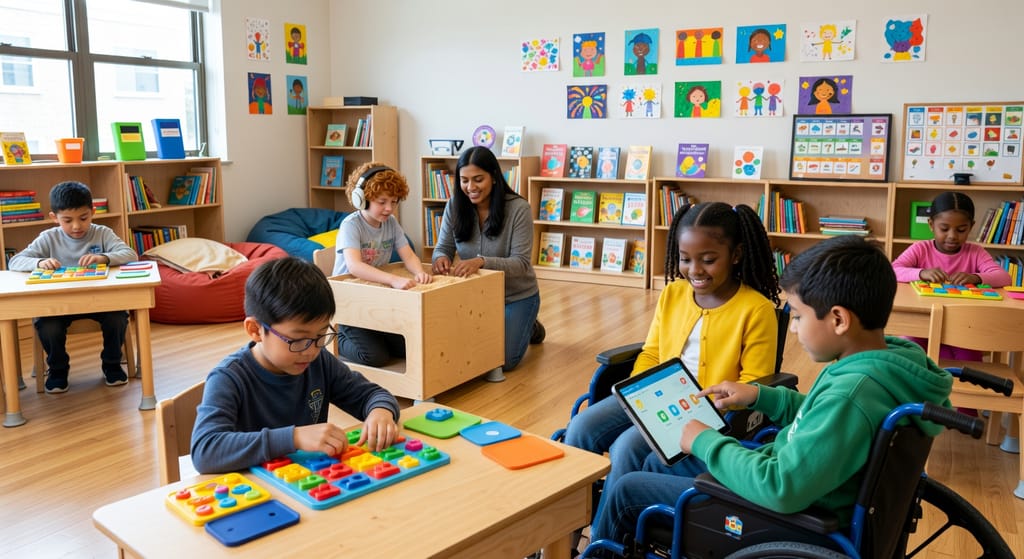
Big schools overwhelm many neurodiverse kids with crowds, rigid bells, and one-pace lessons. Microschools cut that noise. Low ratios, often 4:1 to 10:1, let teachers watch for anxiety triggers or ADHD focus dips.
In a microschool, lessons use multisensory tools like sand trays for letters and real projects for hands on learning. There is no waiting for group catch-up. Parents report kids returning excited, energized and not drained.
Relationships deepen too in the classroom. Teachers know each family and share notes via apps daily. This mirrors homeschool benefits but with pro oversight.
Microschool Benefits Backed by Real Examples
At Flourish Schools in Nashville, seven middle schoolers practice 'curiosity' as a daily skill, measuring growth beyond tests. ReThink highlights confidence from genuine friendships in small settings.
For ADHD, short bursts of focused work with movement breaks work wonders. One parent shared her son, once labeled disruptive, now leads group projects in his 8-student pod.
Key Features to Seek in a Microschool
Not all microschools serve special needs equally, parents should check these specifics.
Special ed certification or therapy backgrounds.
IEPs followed, or custom plans created. Flexible pacing for anxiety meltdowns.
Dim lights, fidget tools, quiet zones.
Weekly parent updates, not quarterly.
Decision tip: Visit twice. First, observe a class. Second, shadow your child's potential day. Ask how they handle regressions, like a sudden ADHD med change.
Tech and Tools Integration
Many use AI tutors or apps for extra practice. Personalized platforms adjust math levels per student, freeing teachers for social and emotional coaching.
Finding Microschools Near You
Start with directories from the National Microschooling Center. You can also check state homeschool groups or SpecialNeedsUSA's state resources.
Costs, Funding, and Legal Options
Tuition ranges from $8,000 to $20,000 yearly, which is less than privates. Some take public funds via vouchers or scholarships. In some states like Arizona, Prenda partners with charters for free spots.
You should check insurance coverage for add-on therapies.
Tip: Negotiate sibling discounts or trial months
Potential Challenges and Fixes
Social circles stay tiny, so supplement with clubs and external actives
You can also join Facebook groups for extra support as there are large communities.
For ADHD anxiety combos, ensure behavior plans exist.
FAQ
Are microschools regulated like public schools?
Regulations vary by state. Many register as private or homeschool, following basic safety rules. Check for voluntary accreditations.
Can microschools handle severe needs like nonverbal autism?
Yes, if equipped. Look for AAC tools, ABA integration. KaiPod models also do this well.
How do microschools compare to ABA therapy centers?
Microschools focus on academics with social emphasis. ABA is therapy-heavy. However some can blend both models.
What if my child needs an IEP?
Public microschools honor them. Privates will create equivalents.
Find schools and therapy providers for your child
Tell us your child's needs and location, and we'll match you with special-needs schools, ABA therapy centers, or speech-therapy providers in your area. Free for families.